
Trying to Control Your Emotions Is Hurting Your Performance
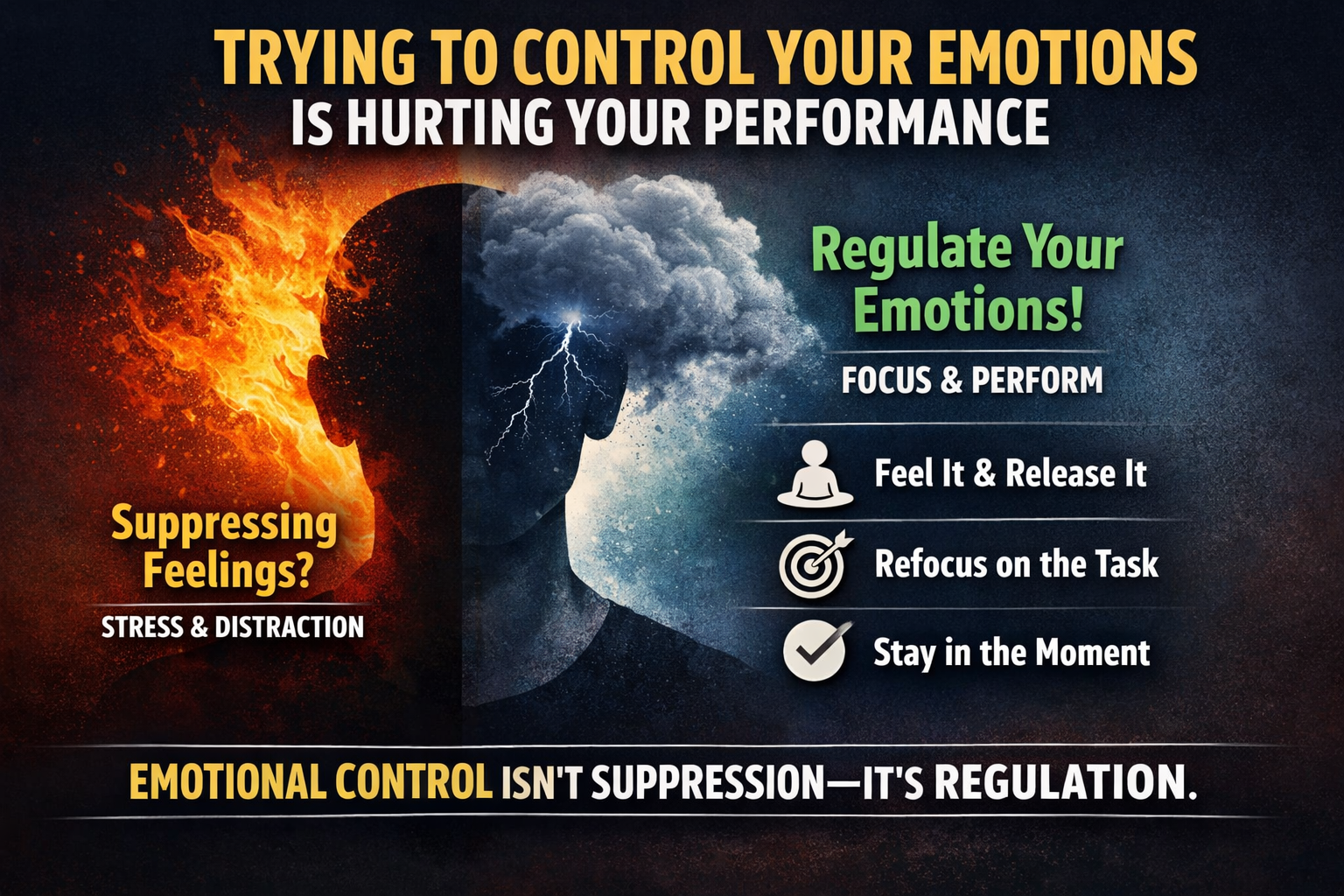
Emotional Control Isn’t Suppression — It’s Regulation
You’ve probably heard it before:
“Control your emotions.”
But in sport, that advice is often misunderstood.
Because the goal isn’t to shut emotions down.
It’s to manage them without letting them take over performance.
Why Emotions Show Up in Competition
Emotions in sport are not a weakness — they’re a natural response to pressure, meaning, and uncertainty.
Before a big moment, athletes might feel:
frustration after a mistake
anxiety before a key play
anger at a referee’s call
self-doubt after a missed opportunity
These reactions are normal.
In fact, research in sport psychology shows that emotions can enhance performance — if they’re regulated effectively.
The Problem with “Just Stay Calm”
Many athletes try to:
ignore how they feel
push emotions down
“stay positive” at all costs
But suppression often backfires.
Studies on emotional suppression show it can:
increase physiological stress
reduce focus and working memory
make emotions rebound stronger
In competition, this can lead to what we call a performance hijack — when attention shifts away from the task and toward internal noise.
What Emotional Regulation Actually Looks Like
High-performing athletes don’t avoid emotions.
They move through them quickly and return to the task.
This involves three key skills:
1. Let the Feeling Pass
Instead of fighting the emotion, athletes:
notice it
label it (“that’s frustration”)
allow it to rise and fall
This reduces its intensity and prevents escalation.
2. Return to the Present Task
After a mistake or emotional spike, attention needs to shift back to:
the next play
the next movement
the next decision
This is often trained through reset routines (e.g., breath, cue word, physical action).
3. Avoid the Performance Hijack
When emotions take over, athletes:
overthink
hesitate
lose awareness of the game
Regulation keeps attention anchored in what matters:
the present moment and the next action.
Why This Matters for Performance
Athletes who develop emotional regulation skills tend to:
recover faster after mistakes
maintain focus under pressure
perform more consistently
This is supported by research on attentional control, arousal regulation, and psychological flexibility — all key components of high performance.
What Actually Helps Athletes Regulate Emotions
Evidence-based strategies include:
Breathing techniques (to regulate arousal)
Cue words (e.g., “next play,” “reset”)
Pre-performance and reset routines
Mindfulness training (improves awareness and disengagement from distractions)
Acceptance-based approaches (reducing resistance to internal experiences)
These tools don’t eliminate emotion.
They make it manageable.
Final Thought
Emotions don’t ruin performance.
Unmanaged emotions do.
The goal isn’t to feel nothing.
It’s to feel it — and still execute.
Call to Action
If you’re an athlete, coach, or parent noticing that emotions are interfering with performance, this is a skill that can be trained.
Emotional regulation is not about being calm all the time.
It’s about being in control of your response when it matters most.
Feel it. Then play on.
