
SPOTLIGHT: OCD Isn’t About Control — It’s About Fear Relief 🔍
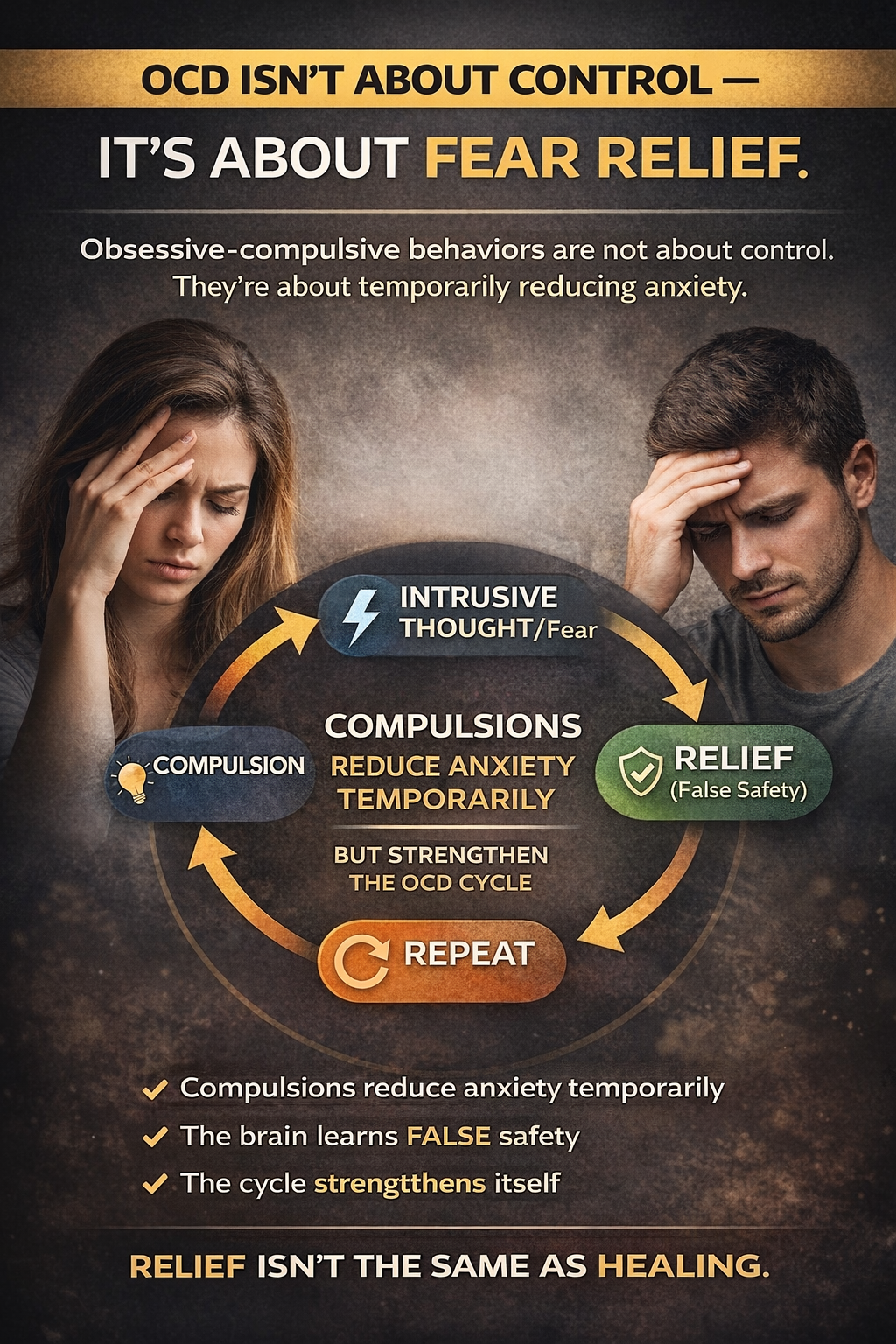
“Just control your thoughts.”
If you’ve ever heard that advice, you know how frustrating it can be. For someone with Obsessive-Compulsive Disorder (OCD), it misses the mark entirely. OCD isn’t about being out of control — it’s the brain’s attempt to manage fear, and it does so in ways that feel urgent but don’t actually help.
Why Compulsions Happen
Imagine this: you have a thought that something bad might happen — the stove might be left on, the door unlocked, or a loved one might get hurt. That fear spikes anxiety. To feel relief, you might:
Check the stove repeatedly
Wash your hands over and over
Repeat a phrase or number in your head
Performing these behaviors reduces anxiety temporarily, making you feel safer. But this relief is short-lived — the brain learns that the compulsion “worked,” reinforcing the cycle.
The OCD Cycle — Why It Keeps Coming Back
1️⃣ Intrusive Thought or Fear – Your brain flags a threat, real or imagined.
2️⃣ Compulsion – You perform a behavior to relieve anxiety.
3️⃣ False Safety Learning – The brain thinks, “Doing this kept danger away.”
4️⃣ Cycle Repeats – Obsessions and compulsions intensify, consuming more time and energy.
Research shows this cycle strengthens itself over time, making compulsions harder to resist and anxiety even higher in the long run.
Why Temporary Relief Isn’t Healing
Relief from compulsions doesn’t fix the underlying fear. It wires the brain to rely on rituals, keeping OCD alive. True improvement comes from learning to tolerate fear without reacting.
Evidence-based strategies include:
Exposure and Response Prevention (ERP): Facing fears without performing compulsions.
Cognitive Behavioral Therapy (CBT): Understanding patterns of OCD thoughts and behaviors.
Mindfulness & Acceptance Techniques: Observing thoughts without reacting.
Real Change Means Facing Fear, Not Controlling Thoughts
OCD isn’t a lack of control. It’s a brain trying — but failing — to manage uncertainty and danger. Healing happens when you sit with fear, resist rituals, and retrain your brain.
Take the First Step
If OCD is interfering with daily life, learning the cycle is just the beginning. You don’t have to fight it alone.
Ready to break the cycle and regain control? Explore evidence-based strategies that actually help — not just provide temporary relief.
[Learn More / Book a Consultation]
