
The Hidden Cost of Being the Reliable Athlete
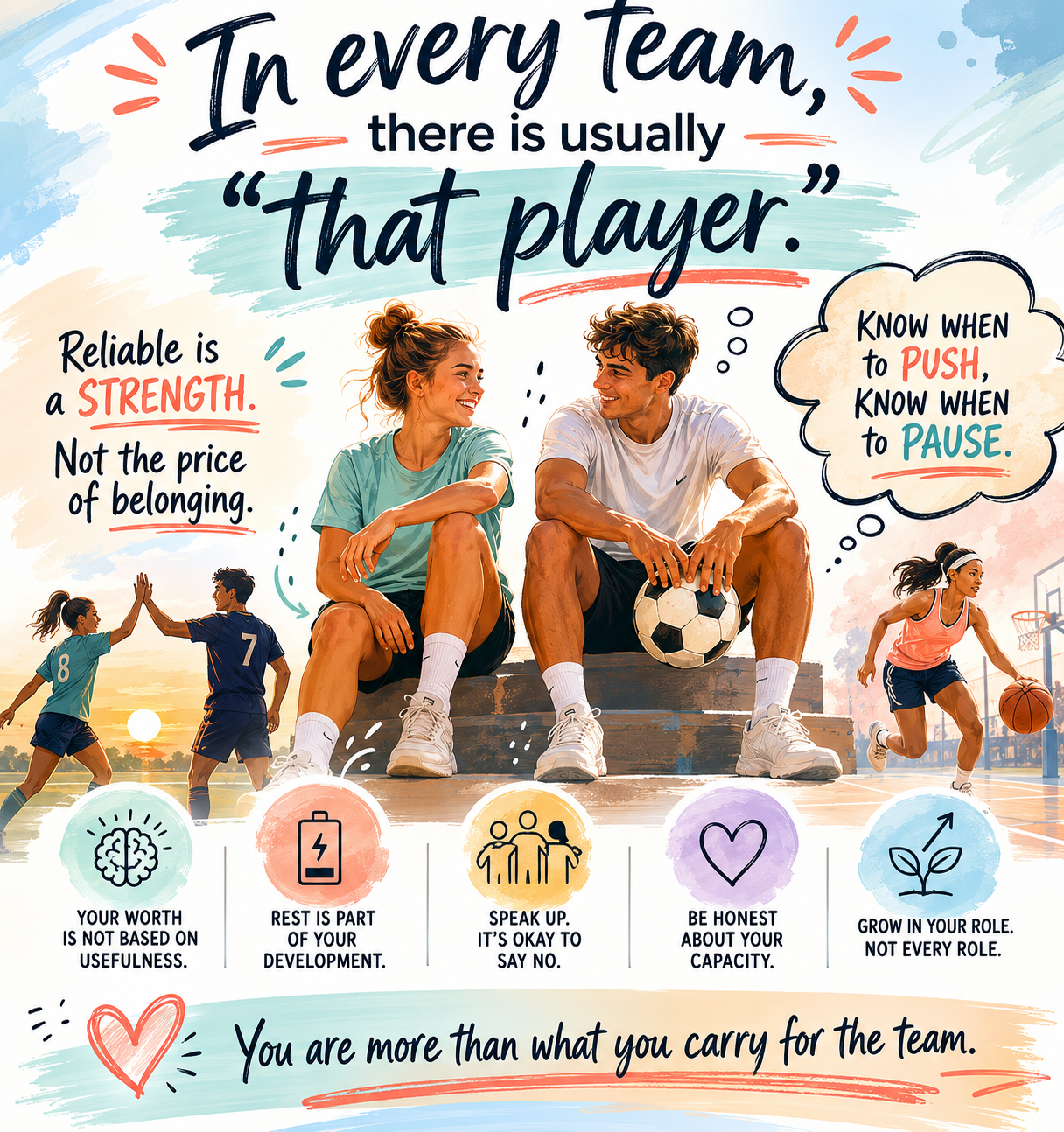
In every team, there is usually “that player.”
The one who shows up early.
The one who stays late.
The one who plays through pain, fills in wherever needed, and rarely says no.
They are the athlete coaches trust and teammates depend on. At first, that reputation can feel like a compliment. But over time, being the “reliable one” can turn into a heavy role that is hard to step out of.
For many athletes, this pressure does not come from laziness, lack of motivation, or weakness. It comes from being seen as dependable for so long that reliability becomes expected, not appreciated.
When reliability turns into a role
A reliable athlete is often the one who gets moved around the field or court without question. They may be asked to play many positions, shift roles constantly, or cover gaps wherever the team needs them. Because they are dependable, they may never be given the chance to settle into one position, learn it deeply, and master it.
That can be frustrating.
Instead of being developed in one role, they become the athlete who can do “a bit of everything.” On paper, that looks valuable. In reality, it can leave them feeling overlooked, underdeveloped, and stuck in a cycle where their flexibility matters more than their growth.
Over time, the message can become:
“You are useful because you adapt.”
Not: “You are being supported to grow.”
What athletes start to believe
When reliability becomes part of an athlete’s identity, they may begin to believe things like:
If I say no, I’ll let people down.
If I’m not available, I’m not valuable.
If I slow down, someone else will take my place.
If I ask for one role, I’ll seem difficult.
If I rest, I’m being selfish.
These beliefs can build slowly, especially in environments where being dependable is praised more than being honest about limits.
The athlete may start ignoring fatigue, stress, frustration, or even injury because being needed feels safer than being replaced.
The hidden cost
From a sports psychology perspective, this kind of pressure can lead to burnout, anxiety, irritability, reduced enjoyment, and poor recovery. It can also increase injury risk when athletes push through too much for too long.
From a social work perspective, there is also an emotional cost:
guilt when resting
fear of disappointing coaches or teammates
difficulty asking for help
confusion about personal identity outside of sport
Sometimes the athlete is not just tired. They are carrying the emotional weight of always being the one who holds things together.
Why it is hard to step back
Many athletes do not stay in this pattern because they love being overextended. They stay because it works.
Being reliable often brings praise, trust, playing time, and a sense of belonging. It can make an athlete feel important and secure within the team system. That makes it hard to say no, even when the role is no longer sustainable.
The issue is not just individual choice. It is also the environment.
A better question is not only, “Why doesn’t this athlete speak up?”
It is also, “What in this system makes it so hard to speak up?”
What support can look like
The goal is not to stop being reliable. Reliability is a strength. The goal is to stop making reliability the price of belonging.
Support can include:
giving athletes a chance to grow in one position instead of constantly shifting them
checking in on workload, fatigue, and stress
normalizing rest as part of development
helping athletes speak honestly about capacity
reminding them that their worth is not based only on usefulness
Coaches, parents, and support staff play a huge role here. Athletes do better when they are trusted not just for what they can carry, but for who they are.
A different kind of reliable
What if being reliable did not mean always available?
What if it meant:
knowing when to push
knowing when to pause
being honest about capacity
trusting that your value does not disappear when you need rest
That version of reliability is healthier. It is more sustainable. And it gives athletes room to grow without constantly sacrificing themselves for the team.
If this resonates, it may be because many athletes are praised for being dependable long before they are supported to protect their own well-being.
