
ADHD and Decision Fatigue: The Mental Load No One Sees
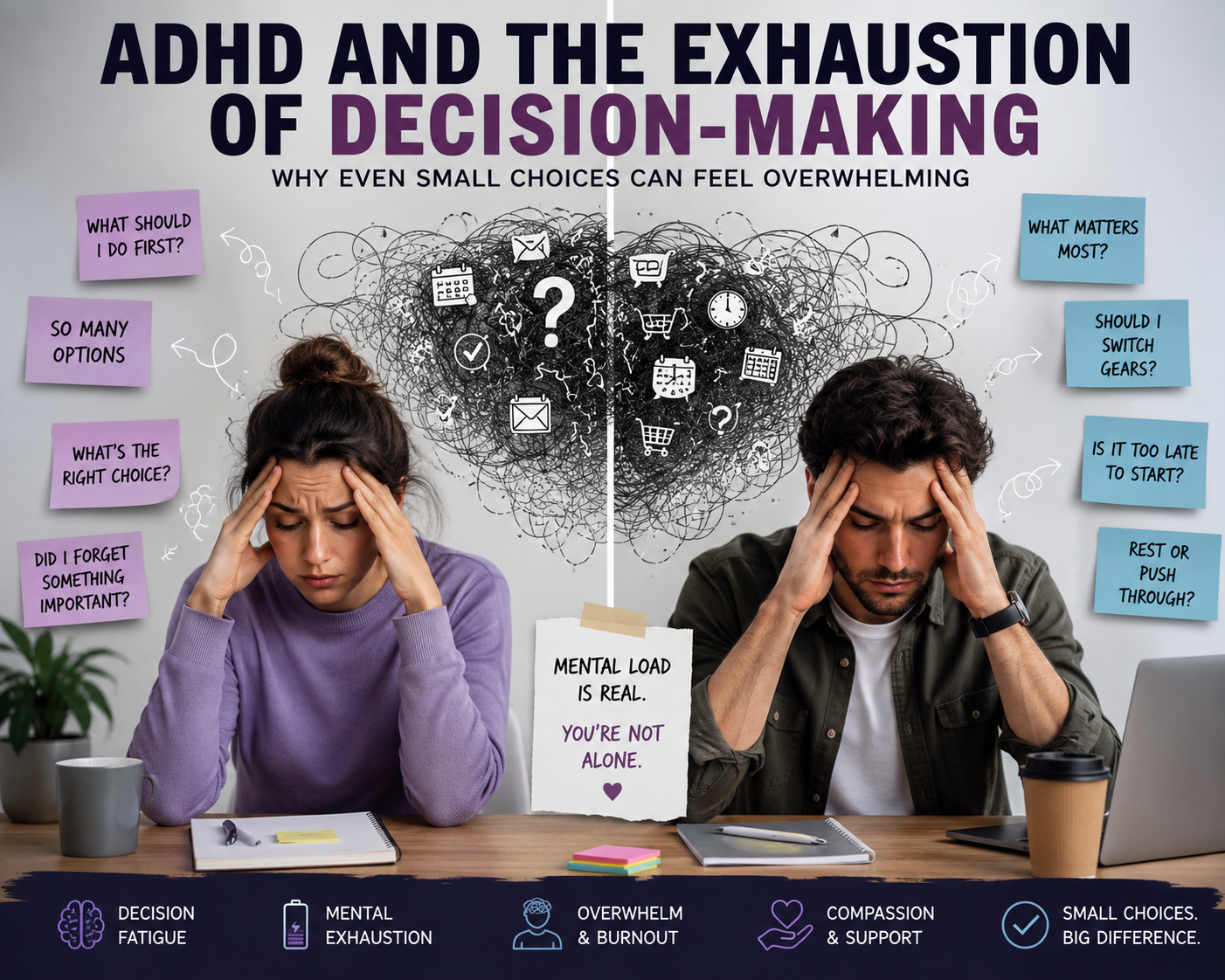
There’s a kind of exhaustion that sleep doesn’t fix.
It’s not from doing too much — it’s from deciding too much.
If you have ADHD, your day doesn’t just begin with tasks. It begins with questions:
Where do I start?
What matters most?
Am I already behind?
Did I forget something?
Before anything actually gets done, your brain is already working overtime.
The Real Reason Everything Feels So Hard
ADHD affects executive functioning — the part of the brain responsible for organizing, prioritizing, and following through.
So instead of a simple flow like:
Decide → Act → Done
It often looks like:
Overthink → Start → Second-guess → Switch → Restart → Feel stuck
Even small decisions can feel heavy. And when every step requires effort, it’s no surprise the day feels draining before it’s even halfway over.
The Hidden Drain No One Talks About
By midday, decision fatigue starts to creep in:
What should I eat?
Do I respond now or later?
Is it too late to start?
Should I push through or rest?
For ADHD brains, this hits faster and harder — because so much energy has already gone into trying to stay focused, organized, and on track.
This isn’t laziness.
It’s cognitive overload.
When Decisions Become Emotional
With ADHD, decisions aren’t just practical — they’re emotional.
You might notice thoughts like:
“If I choose wrong, I’ll fall behind.”
“If I start and don’t finish, I’ll feel worse.”
“I should be able to handle this on my own.”
This emotional layer adds pressure, which leads to avoidance… which leads to more exhaustion.
The Cycle That Keeps You Stuck
Many people with ADHD find themselves in a loop:
Too many choices →
Trouble prioritizing →
Delayed action →
Increased pressure →
Mental fatigue →
Even harder decisions
Over time, this can impact confidence, productivity, and overall well-being.
How to Lighten the Mental Load
Decision-making may never feel effortless — but it can feel easier.
Here’s what actually helps:
Reduce daily decisions by creating simple routines (meals, mornings, work start)
Externalize your priorities — keep a visible “Top 3” instead of holding everything in your head
Set time limits for decisions and stick to them
Choose “good enough” instead of “perfect”
Build rest into your day — it’s part of productivity, not a reward for it
Small changes reduce mental strain in big ways.
Rebuilding Trust in Yourself
One of the quietest impacts of ADHD decision fatigue is self-doubt.
When decisions constantly feel hard, it’s easy to stop trusting your own judgment.
Rebuilding that trust starts small:
Make a choice → stick with it → don’t revisit it
Progress builds confidence — not perfection.
You Don’t Have to Keep Doing This Alone
If decision fatigue is running your day, it’s not a sign you need more discipline.
It’s a sign you need better systems — and the right kind of support.
ADHD doesn’t just affect attention — it affects the energy required to choose, organize, and move through daily life. When decision-making becomes exhausting, it’s not a personal failing. It’s a sign that the cognitive system is overloaded and asking for structure, not more effort.
Support, routines, and reducing unnecessary choices can help shift life from constant decision fatigue into something more manageable and sustainable.
I help individuals with ADHD reduce overwhelm, build sustainable routines, and regain confidence in their daily decisions.
Because life shouldn’t feel this heavy.
→ Learn how you can be supported Contact me
