
ADHD and Self-Trust: When You’ve Spent Years Feeling “Not Good Enough”
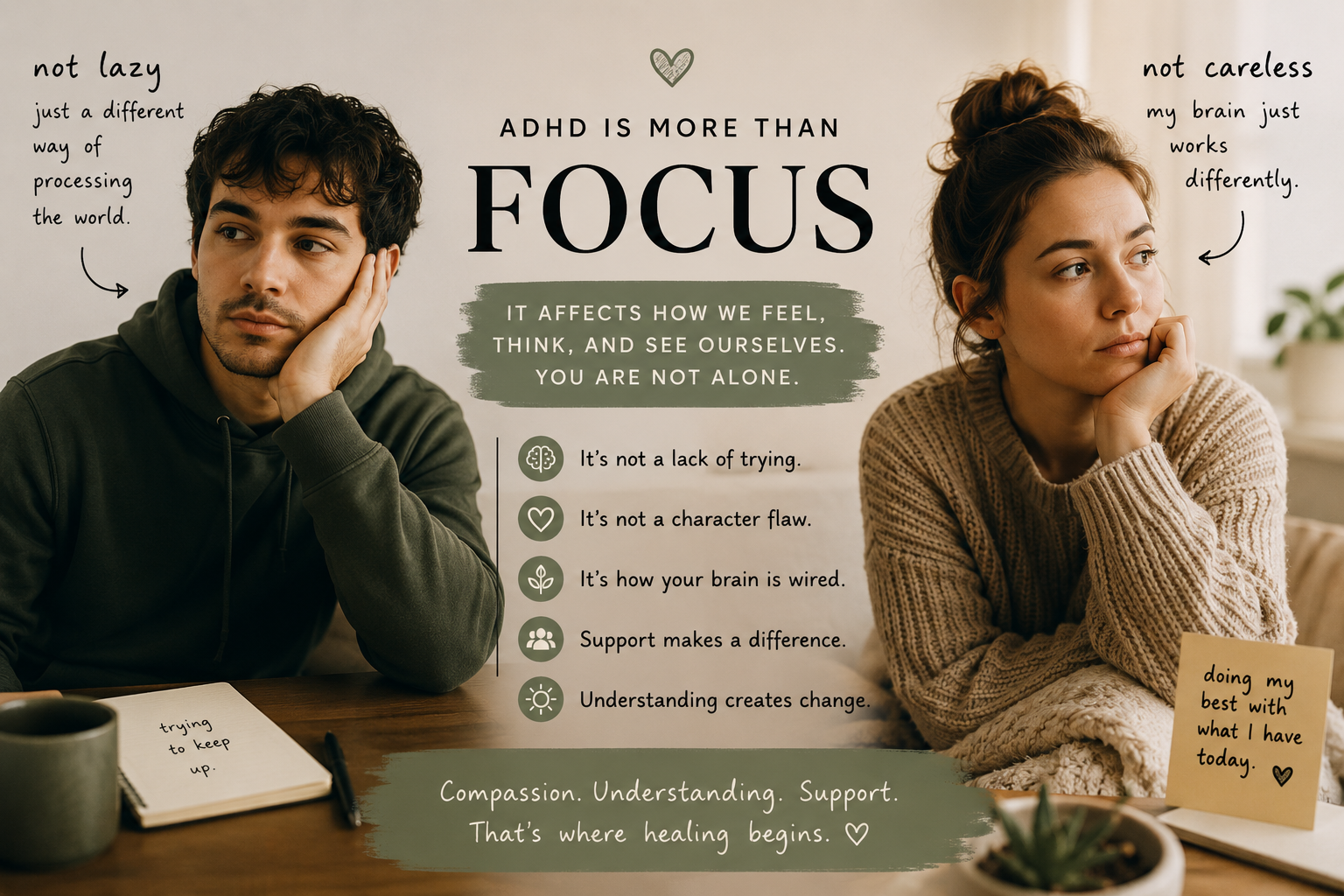
Many teens and adults with ADHD grow up believing something is wrong with them.
Not because they are lazy or incapable, but because life has often felt harder than it seems to for everyone else.
Maybe you forget things that matter to you.
Maybe you start tasks but struggle to finish them.
Maybe emotions feel intense, fast, and difficult to slow down.
Maybe you constantly question yourself after conversations, decisions, or mistakes.
Over time, these experiences can slowly shape the way a person sees themselves.
For many people, ADHD is not only about attention or focus. It can affect identity, confidence, relationships, emotional regulation, and the ability to trust yourself.
The Emotional Weight Many People With ADHD Carry
ADHD is a neurodevelopmental condition that affects executive functioning skills such as:
organization
task initiation
emotional regulation
working memory
impulse control
time management
prioritization
But what often gets missed is the emotional impact of living with ADHD for years.
Many people with ADHD spend much of their lives feeling:
behind
overwhelmed
misunderstood
“too sensitive”
inconsistent
frustrated with themselves
exhausted from trying to keep up
Research continues to show strong links between ADHD, low self-esteem, anxiety, burnout, and emotional dysregulation.
When someone repeatedly receives messages that they are careless, dramatic, lazy, disorganized, or “not trying hard enough,” shame often begins to replace self-understanding.
“Why Can’t I Just Do What Everyone Else Seems To Do?”
This is one of the most common questions people quietly ask themselves.
Many adults with ADHD describe spending years overcompensating:
working twice as hard to stay organized
masking struggles from others
relying on pressure to function
pushing themselves into burnout
feeling embarrassed by things that seem “easy” for other people
Eventually, self-doubt becomes automatic.
People begin to question:
their abilities
their emotions
their memory
their decisions
their worth
Sometimes the hardest part is not the ADHD itself — it is the internal criticism that develops after years of feeling like you are constantly falling short.
ADHD and Emotional Regulation
ADHD is also closely tied to emotional regulation, although this is often overlooked.
Many people with ADHD experience emotions intensely. Rejection, criticism, conflict, or feeling misunderstood can feel deeply overwhelming to the nervous system.
This can show up as:
shutting down during conflict
irritability or emotional reactivity
rejection sensitivity
difficulty calming after stress
overthinking social interactions
feeling emotionally exhausted
From a social work perspective, behaviours make more sense when we understand the context surrounding them.
When someone has spent years feeling criticized, misunderstood, or emotionally unsafe, their nervous system often adapts in protective ways.
Therapy is not about judging those responses. It is about understanding them with more compassion.
Rebuilding Self-Trust
Many people with ADHD have spent years trying to become “better” versions of themselves.
More organized.
More productive.
Less emotional.
More consistent.
But healing often begins somewhere different.
It begins with understanding yourself differently.
Rebuilding self-trust may involve:
recognizing how ADHD affects daily functioning
separating identity from shame
learning emotional regulation skills
reducing perfectionism
creating realistic supports instead of unrealistic expectations
understanding nervous system overwhelm
practicing self-compassion
reconnecting with strengths that have been overshadowed by self-criticism
This process is not about lowering expectations or “making excuses.”
It is about reducing shame so change becomes more possible.
ADHD in Teens
For teenagers, ADHD can impact much more than school performance.
Many teens struggle with:
emotional overwhelm
social comparison
motivation
self-esteem
family conflict
academic pressure
feeling misunderstood
Teens with ADHD are often incredibly self-aware of where they struggle, even when they do not show it outwardly.
Supportive therapy can help teens:
build confidence
strengthen emotional regulation
improve communication
understand how ADHD affects them personally
develop coping strategies without shame
feel more understood and supported
When teens feel emotionally safe, growth becomes more sustainable.
ADHD in Adults
Many adults with ADHD enter therapy feeling exhausted.
Some were diagnosed later in life.
Others spent years believing they were simply failing at things other people handled more easily.
Many adults describe:
chronic overwhelm
burnout
cycles of procrastination and shame
difficulty slowing their thoughts
relationship struggles
emotional exhaustion
feeling disconnected from themselves
Therapy can help create space to better understand these patterns instead of continuing to fight against them.
Often, people are not “broken.”
They are carrying years of pressure, criticism, masking, and nervous system overload.
You Do Not Need To Keep Living In Survival Mode
One of the most meaningful parts of ADHD work is helping people move away from self-blame and toward self-understanding.
Not everything changes overnight.
But when people begin understanding how ADHD affects their emotions, relationships, nervous system, and sense of self, many experience less shame and more clarity.
And from there, healing becomes more possible.
Looking for ADHD Support?
I support teens and adults navigating ADHD, anxiety, emotional overwhelm, self-esteem struggles, and nervous system burnout through a compassionate, trauma-informed, and strengths-based approach.
If you are looking for support, therapy can provide space to better understand yourself, develop practical coping strategies, and rebuild trust in yourself again.
