
ADHD, Conflict, and Feeling Misunderstood in Relationships
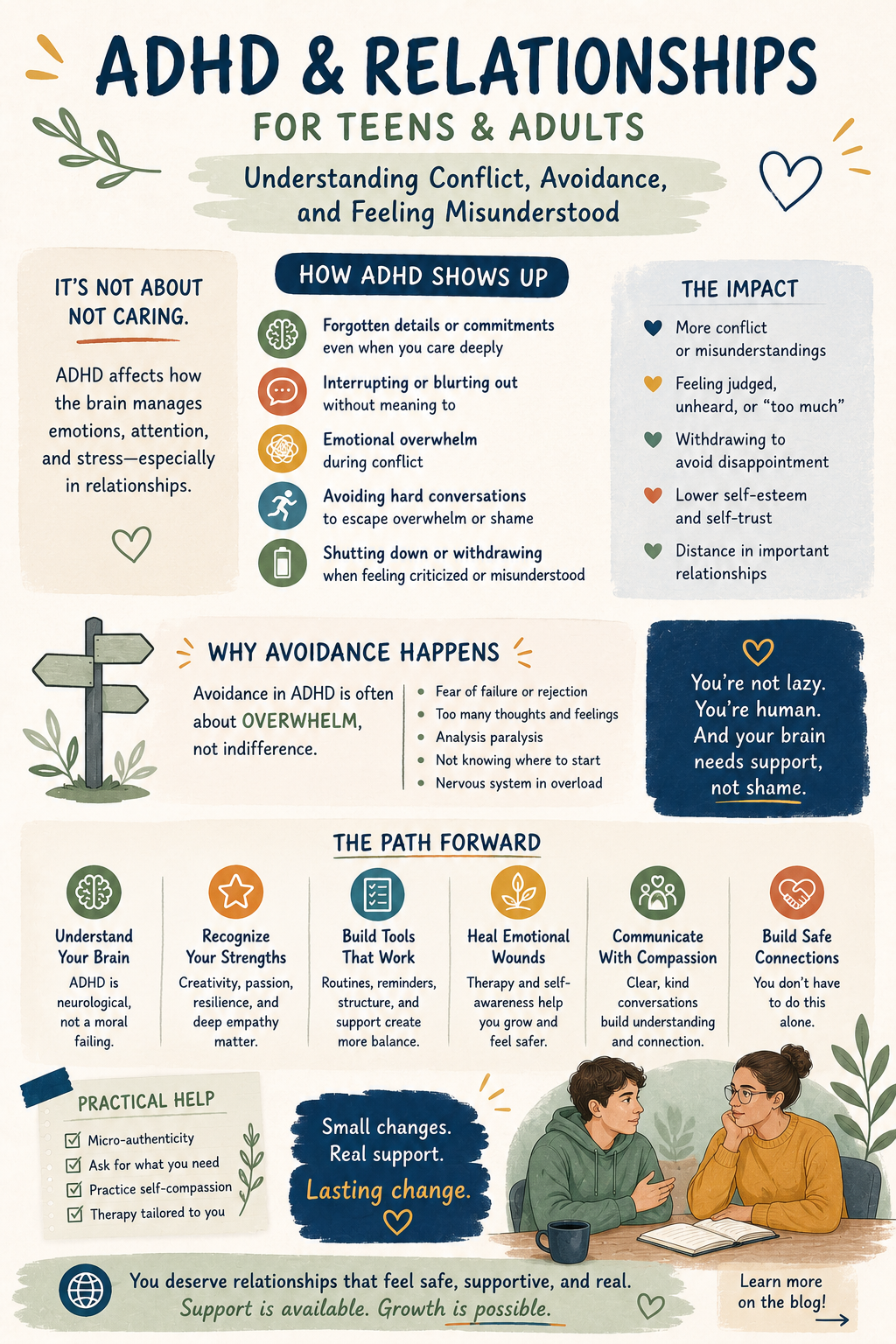
Some of the hardest parts of ADHD are not always the most visible. For many teens and adults, ADHD shows up in relationships as conflict that escalates quickly, avoidance that looks like disinterest, or a persistent feeling of being misunderstood.
These experiences can affect friendships, family life, dating, school, work, and parenting. And while they may be frustrating for everyone involved, they are often rooted less in “not caring” and more in overwhelm, emotional regulation difficulties, shame, and stress.
Many people with ADHD care deeply. In fact, they may care so much that relationships feel emotionally intense and harder to manage. Understanding that difference can be a powerful first step toward reducing blame and building connection.
ADHD Is More Than Attention Difficulties
ADHD is often described as a problem with focus, but it affects much more than attention. It can influence executive functioning, which includes the brain skills that help us organize, plan, regulate emotions, manage impulses, and follow through on responsibilities.
This can include challenges with:
Emotional regulation.
Impulse control.
Working memory.
Organization and planning.
Managing stress and overwhelm.
Following through consistently.
Research shows that ADHD can affect interpersonal relationships across the lifespan. Teens and adults with ADHD may be more likely to experience conflict, communication difficulties, emotional sensitivity, and feelings of rejection than peers without ADHD.
That does not mean relationships cannot thrive. It means the patterns often need understanding, support, and practical strategies rather than criticism or shame.
How ADHD Can Show Up in Relationships
ADHD looks different from person to person, but some common relationship patterns include:
Forgetting conversations, plans, or responsibilities.
Interrupting during conversations without meaning to.
Struggling to organize thoughts during conflict.
Avoiding difficult conversations.
Becoming emotionally overwhelmed quickly.
Reacting impulsively during arguments.
Shutting down when feeling criticized.
Difficulty following through consistently.
Feeling deeply hurt by rejection or disappointment.
For teens, these struggles may show up at home, in friendships, at school, or in dating relationships. Adults may notice them affecting long-term partnerships, parenting, family dynamics, or work relationships.
Over time, these patterns can create a painful cycle: one person feels frustrated, the other feels misunderstood, and both walk away disconnected.
Why Conflict Feels So Intense
Conflict can feel especially intense for individuals with ADHD because emotional regulation and stress responses may be harder to manage in the moment.
Some people react quickly in emotional situations. They may raise their voice, become defensive, or say things they do not fully mean once they have had time to calm down. Others may withdraw, go quiet, avoid the conversation, or seem emotionally distant.
From the outside, this can look like:
“They are not listening.”
“They do not care.”
“They are being disrespectful.”
“They are avoiding responsibility.”
“They are overreacting.”
Internally, though, the experience is often very different. Many people with ADHD describe feeling flooded, panicked, ashamed, or confused during conflict. Their emotions can feel too big, too fast, and too hard to sort through in the moment.
This disconnect is one reason relationship misunderstandings happen so easily.
Why Avoidance Happens
Avoidance is one of the most misunderstood parts of ADHD.
It can show up as:
Not responding to messages.
Putting off homework or work tasks.
Avoiding conflict or difficult conversations.
Struggling to ask for help.
Withdrawing emotionally.
Delaying decisions or responsibilities.
From the outside, avoidance can look like laziness or a lack of motivation. In many cases, though, it is connected to overwhelm, anxiety, perfectionism, fear of failure, or emotional shutdown.
Many teens and adults with ADHD describe a painful experience: they know something matters, they want to respond or follow through, and yet they still feel stuck.
That does not mean they do not care. It often means their brain is having trouble getting started, tolerating discomfort, or organizing the next step.
Shame and criticism usually make avoidance worse, not better.
Feeling Misunderstood Over Time
Many people with ADHD grow up hearing messages like:
“You’re too sensitive.”
“Why can’t you just focus?”
“You never listen.”
“You need to try harder.”
“You’re lazy.”
“You’re overreacting.”
Even when these comments are meant as frustration rather than cruelty, they can have a lasting impact. Over time, repeated criticism may affect self-esteem, emotional safety, and relationship confidence.
Some people begin masking their struggles or constantly trying to prove themselves. Others withdraw emotionally because they expect to disappoint people.
This can lead to loneliness, anxiety, low self-confidence, and difficulty trusting that relationships can be safe.
Rejection Sensitivity and ADHD
Many individuals with ADHD experience strong emotional reactions to criticism or rejection. Even small moments of perceived disappointment can feel deeply painful.
This may show up as:
Becoming defensive quickly.
Overthinking conversations afterward.
Assuming others are upset or disappointed.
Avoiding situations where failure is possible.
People-pleasing or over-apologizing.
Pulling away emotionally after conflict.
For teens especially, this can affect friendships, school experiences, sports, family relationships, and identity development.
When someone is constantly bracing for rejection, even ordinary interactions can start to feel emotionally exhausting.
How Support Can Help
ADHD is not just about attention. It affects emotions, relationships, stress responses, and self-worth.
With support, teens and adults can learn:
Emotional regulation strategies.
Communication skills for conflict.
Ways to manage overwhelm without shutting down.
Healthy coping skills.
Executive functioning supports.
Self-awareness and self-compassion.
Relationship and attachment patterns.
Therapy can also help families, partners, and individuals understand the impact ADHD has on relationships while reducing cycles of blame, shame, and frustration.
When people understand what is happening beneath the surface, relationships often shift from tension to empathy.
You Are Not Too Much
One of the most common experiences I hear from teens and adults with ADHD is the feeling of being “too much.”
Too emotional.
Too forgetful.
Too sensitive.
Too inconsistent.
Too hard to understand.
But ADHD does not define a person’s worth, intelligence, or capacity for meaningful relationships. It means the brain may process emotion, stress, and conflict differently.
With the right tools, support, and understanding, relationships can become more stable, more connected, and less overwhelming.
If you or your teen are struggling with ADHD, conflict, avoidance, or feeling misunderstood in relationships, support can make a meaningful difference. Therapy can provide practical strategies, insight, and a space to feel understood.
