
High Functioning with ADHD & Silently Struggling
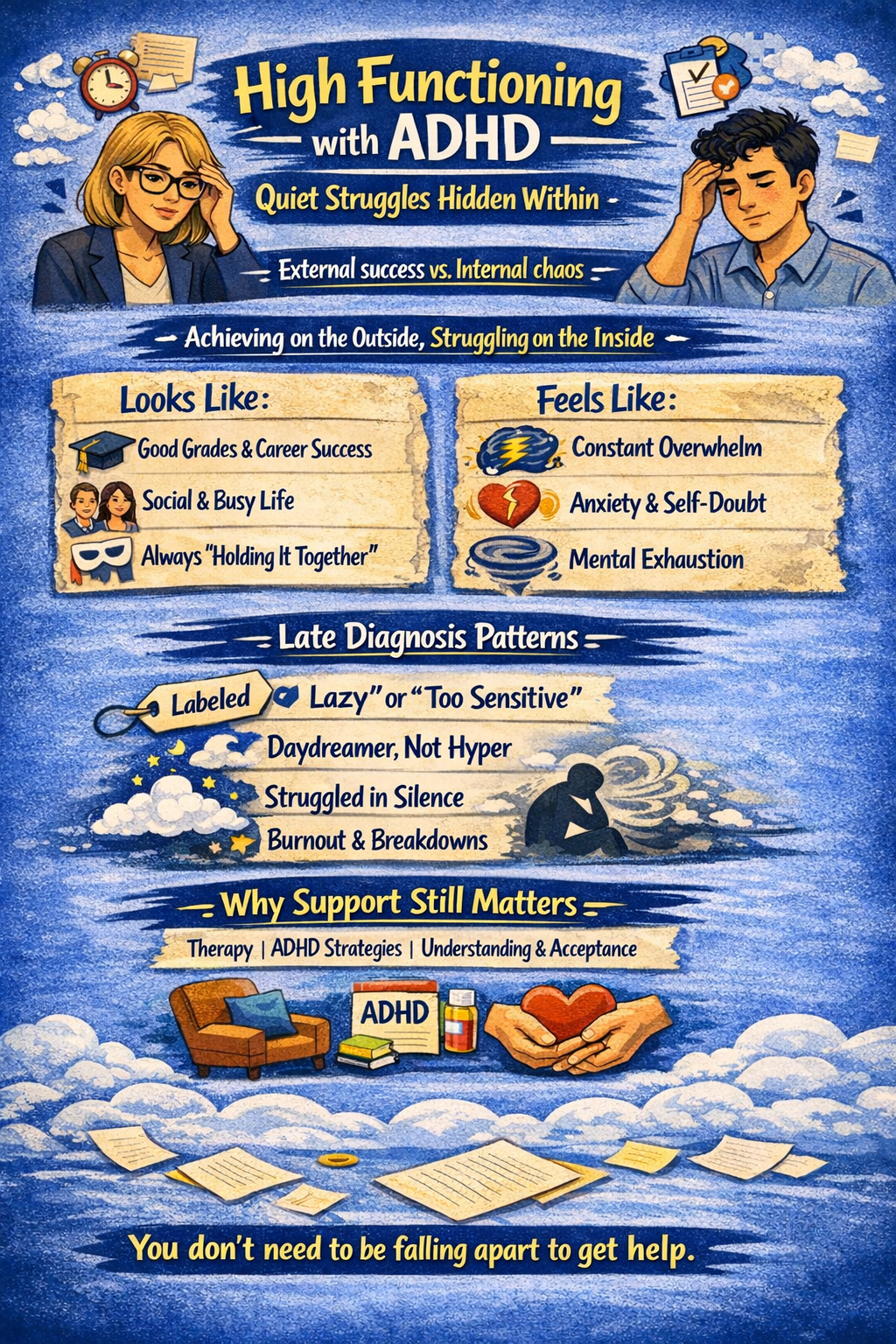
Being ‘high functioning’ with ADHD often means silently struggling.”
When people hear “high functioning,” they often picture someone who has it all together—good grades, a job, friends, goals, and a future that looks stable on the outside. But for many people with ADHD, “high functioning” doesn’t mean not struggling. It means struggling quietly.
It means meeting expectations while feeling overwhelmed, exhausted, and constantly behind. It means appearing successful on the surface while your mind feels like a tornado.
External Success vs. Internal Chaos
Many people with ADHD grow up learning how to mask their symptoms. They find ways to compensate: staying up late to finish work, over-preparing, people-pleasing, or pushing themselves to exhaustion. From the outside, they may look organized, motivated, and capable.
Inside, it can feel very different.
You might:
Replay mistakes over and over in your head
Feel anxious about forgetting something important
Struggle to start tasks, even when you care about them
Feel mentally “noisy” or restless
Constantly doubt yourself, even when you succeed
Because you do manage to get things done—eventually—your struggles are often dismissed. Others may say, “But you’re doing fine,” or “Everyone feels like that sometimes.” Over time, this can make you question your own experience and feel guilty for needing help.
Late Diagnosis Patterns
Many people with ADHD are not diagnosed until their teen years or adulthood, especially those who:
Did well in school when they were younger
Are quiet, creative, or daydreamy rather than hyperactive
Learned to hide their struggles
Were labeled “lazy,” “too sensitive,” or “not trying hard enough”
They often only seek help when life becomes more demanding—when school gets harder, responsibilities increase, or burnout sets in. Suddenly, the coping strategies that worked before stop working. That’s when many people finally realize: This isn’t just stress. Something deeper is going on.
Late diagnosis can bring relief, but also grief. People may wonder how different life could have been if they’d had support sooner.
Why Support Still Matters
You do not need to be in crisis to deserve support.
ADHD isn’t just about focus—it affects motivation, emotional regulation, memory, time management, and self-esteem. Even if you are “doing okay,” carrying everything alone can slowly wear you down.
Support can look like:
Therapy or coaching
School or workplace accommodations
Learning ADHD-friendly strategies
Medication (if appropriate and guided by a professional)
Being understood instead of judged
Getting help doesn’t mean you’re failing. It means you’re choosing to make life easier, healthier, and more sustainable.
Final Thought
Being “high functioning” with ADHD often means surviving, not thriving. You are allowed to want more than just getting by.
You don’t need to be falling apart to get help.
