
Most Performance Anxiety Isn’t Fear — It’s Loss of Control
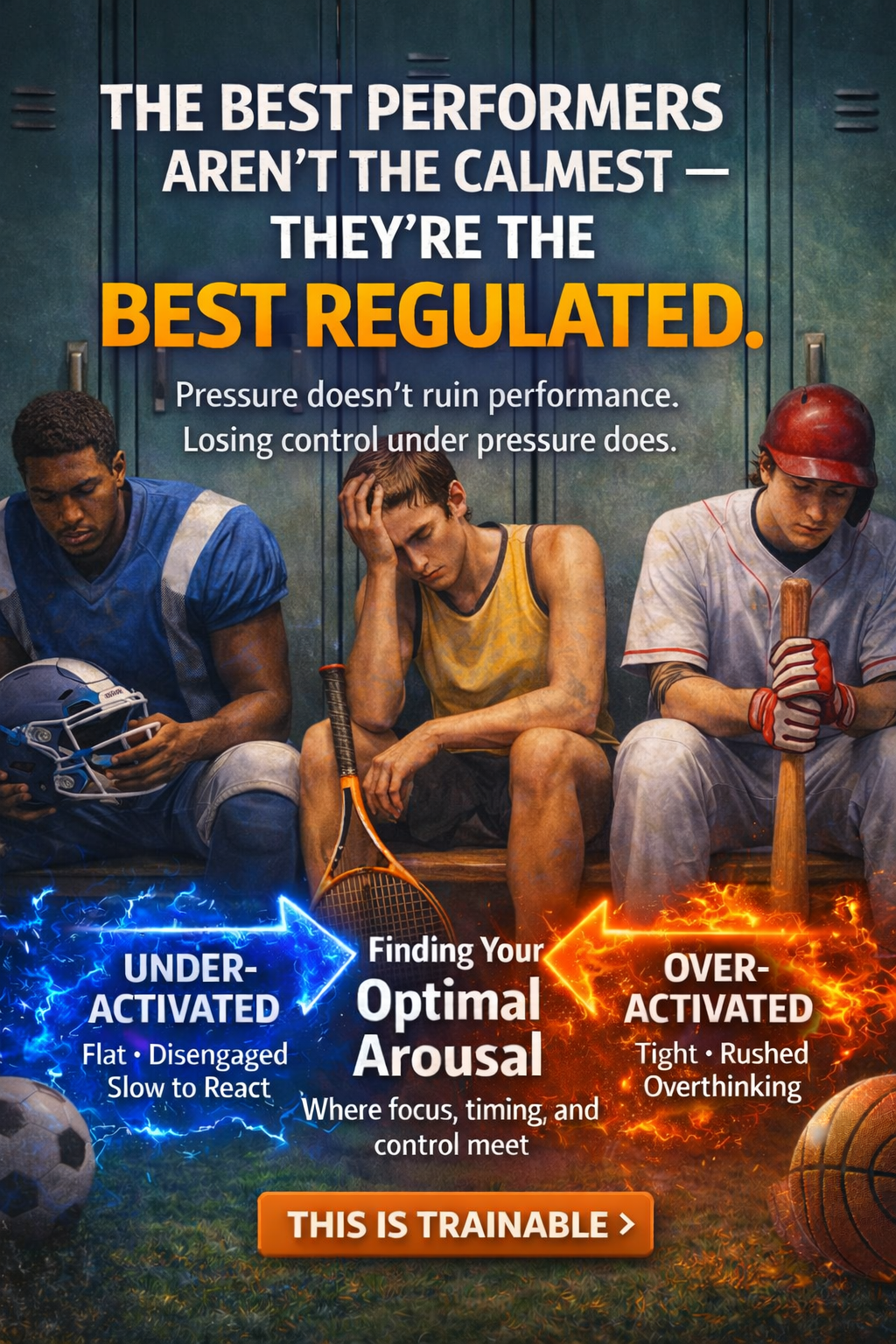
Not CALM, REGULATED
Most athletes don’t choke because they’re scared.
They choke because, in key moments, they feel their body and mind stop listening to them.
You can see it before they name it:
The warm-up feels rushed
Movements feel tight instead of fluid
Thoughts get louder right when they need to be quieter
What we often label as performance anxiety isn’t fear of failure — it’s a loss of perceived control under pressure.
And that distinction matters.
What Pressure Does to Attention
Under pressure, attention naturally narrows. This is a built-in survival response, not a weakness.
In sport, that narrowing often shows up as:
Overthinking mechanics that are usually automatic
Fixating on mistakes, scores, or outcomes
Losing awareness of space, timing, or teammates
In low-pressure situations, athletes rely on procedural memory — skills executed automatically through training. Under pressure, the brain shifts toward conscious control, pulling skills out of flow and into effort.
That’s why athletes say:
“I was thinking too much.”
They’re not making excuses. Their attentional system changed.
The Body’s Response to Pressure
Performance anxiety is not just mental — it’s physiological.
Common responses include:
Increased heart rate and muscle tension
Shallow or irregular breathing
Disrupted timing and coordination
A sense of being rushed, heavy, or disconnected
This is the autonomic nervous system doing its job: preparing the body for action.
The problem isn’t activation itself. High-level performance requires arousal. The problem is when the athlete feels overridden by their body, rather than able to work with it.
When activation feels uncontrollable, confidence drops — not because skill is gone, but because agency is.
Why Loss of Control Feels So Threatening
At the core of performance anxiety is a simple experience:
“I don’t trust that I can access my skills right now.”
That loss of trust narrows attention even further, increases tension, and pulls athletes into monitoring rather than performing.
Over time, this can lead to:
Avoiding high-pressure situations
Playing “safe” instead of playing well
Mistaking anxiety for lack of readiness
None of this reflects an athlete’s ability. It reflects an untrained response to pressure.
Regaining Agency Changes Performance
Agency — the sense of “I can influence what’s happening right now” — is one of the strongest buffers against performance anxiety.
When agency is restored:
Attention widens
Activation becomes usable
Confidence becomes behavioral, not just motivational
This isn’t about calming down or eliminating nerves.
It’s about learning how to:
Anchor attention to controllable cues (breath, rhythm, external targets)
Let the body mobilize without fighting it
Use routines that signal readiness, not danger
Practice pressure intentionally, not avoid it
When athletes feel skilled at responding to pressure, anxiety stops being something that hijacks performance — and becomes something they can navigate.
This Is Trainable
Performance anxiety is not a character issue.
It’s not a toughness problem.
And it’s not fixed.
Attention control, emotional regulation, and physiological awareness are trainable skills, just like strength, speed, or technique.
Athletes don’t need less pressure.
They need more practice feeling in control while under it.
When that happens, pressure doesn’t disappear — but it stops running the show.
Want to Learn How This Is Trained?
Working with performance anxiety isn’t about quick fixes or positive thinking. It’s about understanding how pressure affects your system — and learning how to respond with intention.
If this resonates, you’re not alone — and you don’t have to figure it out on your own.
This is trainable.
