
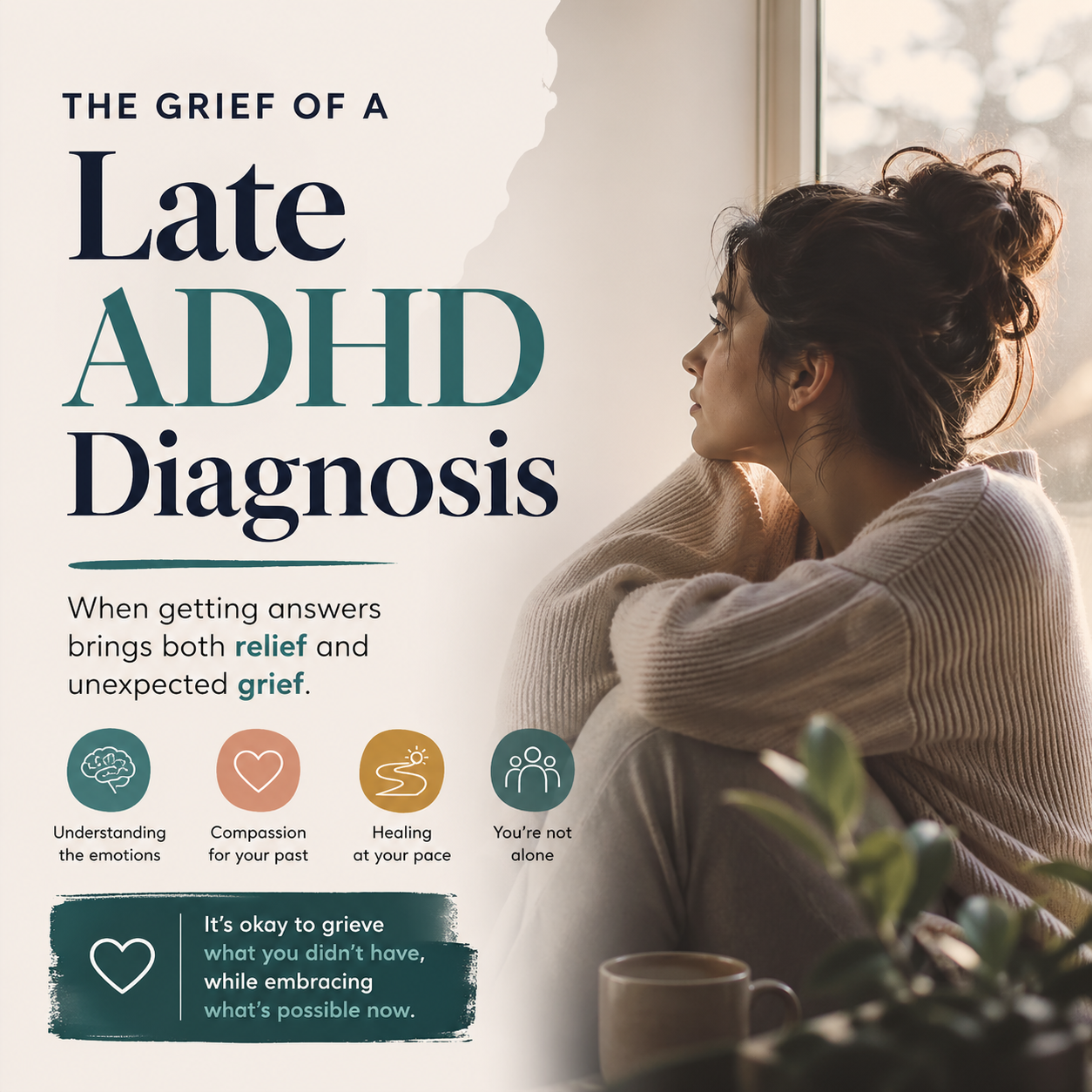
The Grief of a Late ADHD Diagnosis: Why Getting Answers Can Still Hurt
When Relief Isn’t the Only Emotion
For many adults, receiving an ADHD diagnosis later in life can feel like a turning point. Suddenly, patterns that once felt confusing or frustrating begin to make sense.
But alongside that clarity, many people experience something they didn’t expect: grief.
Not just a passing feeling, but a deep emotional response that can include sadness, anger, and a sense of loss. If that’s been your experience, it’s not unusual, and it’s not talked about enough.
Why a Late ADHD Diagnosis Can Feel Like a Loss
Research and clinical consensus show that adults with ADHD are often underdiagnosed, and many experience significant impairment and emotional burden before diagnosis. Beyond the clinical picture, a late diagnosis can also feel personal: you are not just receiving a label, you are reinterpreting parts of your life through a new lens.
The “What Could Have Been”
Many people find themselves reflecting on missed opportunities:
Struggling in school without understanding why.
Being labeled as “lazy,” “unmotivated,” or “too sensitive.”
Facing challenges in relationships or work that now feel more understandable.
That kind of reflection can lead to a quiet but powerful question: “What if I had known sooner?” For many people, that question is part of the grieving process.
The Weight of Misunderstanding
Before diagnosis, it is common to internalize negative beliefs:
“I just need to try harder.”
“Something is wrong with me.”
“Why can’t I get it together?”
Over time, these beliefs can shape self-esteem and identity. When a diagnosis finally arrives, it can bring relief, but also pain in realizing how long those beliefs went unchallenged.
Anger That Deserves Space
Grief does not always look like sadness. Sometimes it shows up as anger:
Toward systems that missed the signs.
Toward professionals who overlooked the possibility.
Toward family members who misunderstood.
This can be especially true for people whose ADHD did not match stereotypes, such as those who were quiet, high-achieving, or primarily inattentive. That anger does not need to be rushed away; it is part of processing what was missed.
A Shift in Identity
A late diagnosis can change how you see yourself in a fundamental way. Moments from the past may suddenly make sense, and struggles may feel less like personal failures and more like unmet needs. Even when that shift is positive, it can still feel disorienting because you are learning about yourself in a new way.
This Can Look Like Grief
What many people experience after a late ADHD diagnosis fits a grief framework, sometimes described in terms of ambiguous loss: mourning something intangible, like a different version of your past or the support you did not receive. You might notice unexpected tearfulness, irritability, emotional exhaustion, or a sense of mourning your younger self. These are not signs that something is wrong; they are signs that something important is being processed.
How to Move Through It
There is no quick fix, but there are ways to support yourself:
Name what you’re feeling. Simply recognizing “this is grief” can bring clarity.
Practice self-compassion. Neff’s 2003 work describes self-compassion as treating yourself with kindness rather than harsh self-criticism.
Revisit your story with new understanding. Your past has not changed, but your perspective has.
Don’t do this alone. Therapy, coaching, or ADHD community can reduce isolation.
Learn what support actually works. ADHD support is about strategies that fit how your brain works, not about trying harder.
The Other Side of the Experience
While grief is real, it is not the end of the story. Over time, many people develop greater self-understanding, less self-blame, stronger relationships, and more effective ways of navigating daily life. The diagnosis did not come too late; it came when it could finally be understood.
You Can Hold Both
A late ADHD diagnosis can bring two truths at once: relief for finally having answers, and grief for the years spent without them. Both are valid, and both deserve space.
References
Kooij, J. J. S., et al. (2019). Updated European Consensus Statement on diagnosis and treatment of adult ADHD. European Psychiatry.
Barkley, R. A. (2015). Attention-Deficit Hyperactivity Disorder: A Handbook for Diagnosis and Treatment.
Neff, K. D. (2003). The development and validation of a scale to measure self-compassion. Self and Identity, 2(3), 223–250
