
The Cost of Looking Fine: ADHD Masking and Emotional Exhaustion
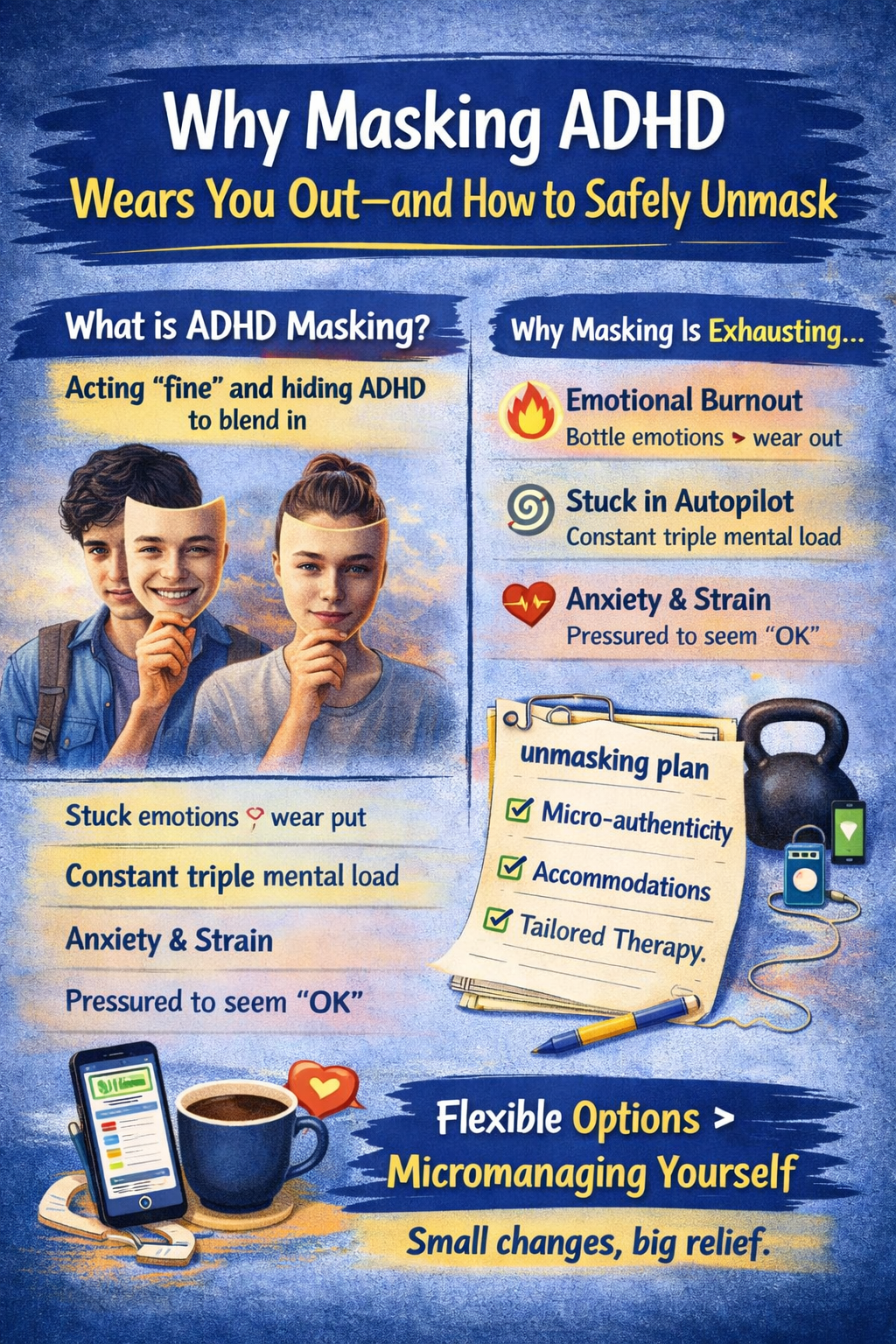
Masking ADHD—acting "fine" to blend in—is a survival tactic for many people aged 16 and up, but it often leads to deep emotional burnout. Teens and young adults especially master this skill to fit in at school, sports, or work, only to face exhaustion later. Recognizing this pattern can help you reclaim your energy and live more authentically.
What Is ADHD Masking?
ADHD masking involves hiding traits like distractibility, impulsivity, fidgeting, or emotional intensity to meet social or academic expectations. You might rehearse conversations, force focus in class, suppress hyperactivity, or over-rely on planners to seem organized. Research indicates up to 80% of people with ADHD engage in masking, with higher rates among those diagnosed later in life, including adolescents and emerging adults.
This stems from brain differences: ADHD involves atypical dopamine regulation, making "normal" behaviors require extra effort. Neuroimaging shows these individuals expend more cognitive resources to mimic neurotypical actions, much like running a background program constantly.
Why Masking Leads to Exhaustion
Masking demands a triple mental load: the task itself, managing ADHD challenges, and performing "fine." For 16+ clients, this shows up as:
Emotional drain: Bottled feelings lead to irritability, meltdowns, or numbness.
Daily fatigue: School days or practices leave you wiped out, even without "big" efforts.
Burnout parallels: Similar to autistic burnout, it spikes anxiety and physical symptoms like chronic headaches or sleep issues.
A 2023 Journal of Attention Disorders study linked masking to double the burnout rates in neurodivergent youth and adults, as it further depletes already low dopamine reserves needed for motivation.
Real Impacts
School and sports: Thriving on the surface but crashing during exams or seasons.
Relationships: Feeling disconnected, as masking hides your true self from friends or family.
Mental health risks: Up to 50% comorbidity with anxiety/depression; masking worsens imposter syndrome.
Future plateaus: High school success doesn't sustain into college or jobs without change.
Many share: "I was the 'good student' who powered through—until I couldn't leave my room."
Signs You're Masking (For Teens, Young Adults, and Beyond)
Needing hours to recover after school or social time.
Small frustrations triggering big reactions.
Relying on energy drinks, scrolling, or isolation to recharge.
Feeling "fake" or empty after achievements.
Secret joy in alone time where you can unmask.
Evidence-Based Ways Forward
Unmasking safely rebuilds energy:
Micro-authenticity: Allow one unmasked moment daily, like fidgeting openly with safe people.
Accommodations: Request quiet breaks or extended time without shame.
Body doubling: Study or train with peers who understand.
Tailored therapy: that cuts masking by 30-40%, helping all ages process emotions.
Stop the Exhaustion—Start Here
If masking has worn you down, support is available for ages 16+. Contact me I help neurodivergent teens, young adults, and beyond unmask without burnout. Specializing in ADHD, sports psychology, and more.
