
I Think I Have ADHD and I Can Afford a Diagnosis—Should I Get One?
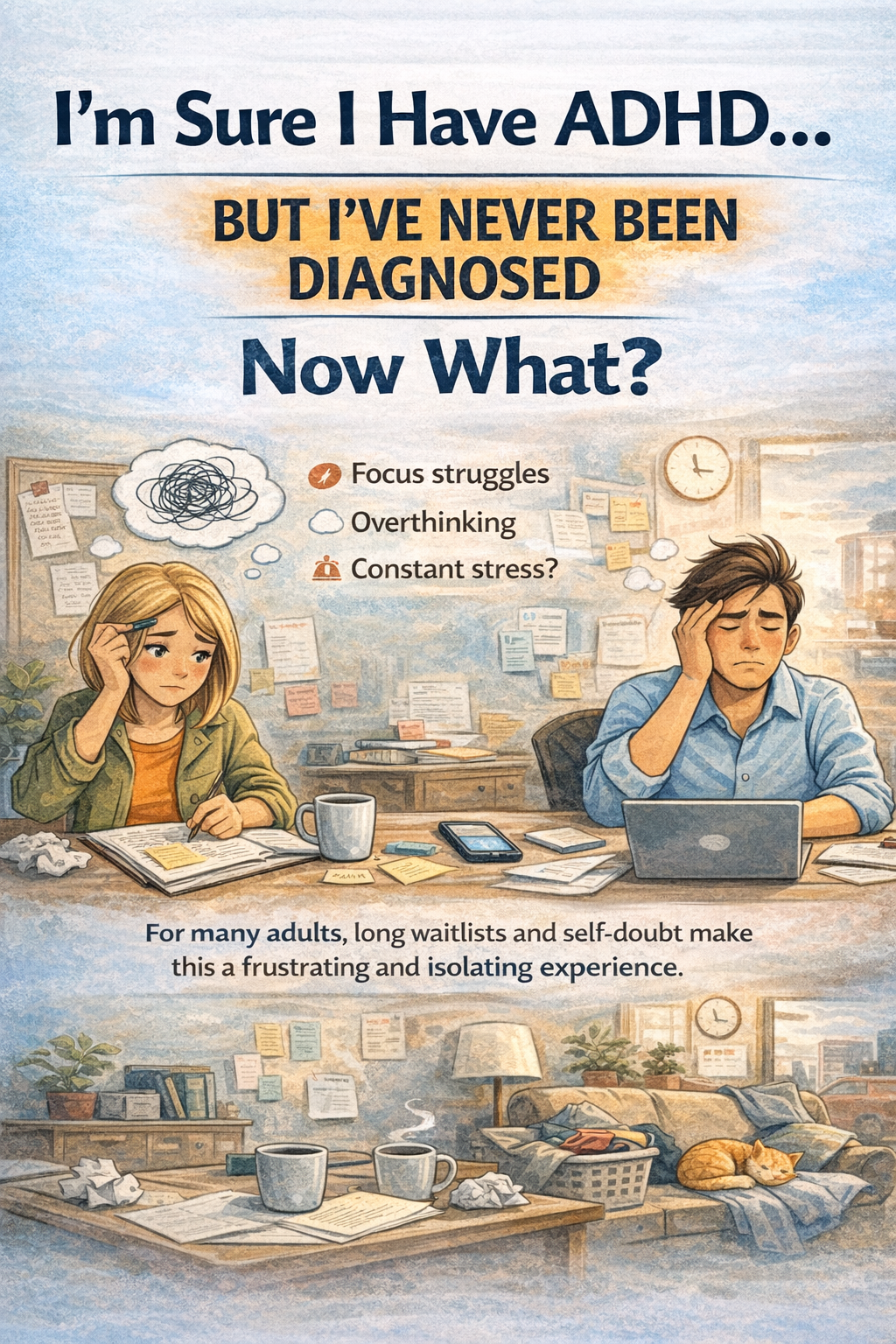
You’ve read the lists.
You’ve watched the videos.
You relate to almost everything.
Trouble focusing. Overthinking. Emotional overwhelm. Starting things and not finishing them.
At this point, you may not be asking whether ADHD is a possibility anymore. You may be asking something more practical: If I can afford a diagnosis, should I get one?
That’s a real question, and for many adults, it’s the one that shifts them from uncertainty into action.
Why this question matters
For some people, the biggest barrier to getting assessed is cost. For others, it’s not financial at all — it’s uncertainty, fear of being dismissed, or not knowing whether a diagnosis will actually change anything.
But if money is not the issue, the question becomes less about whether you can get assessed and more about whether it would help you move forward.
A diagnosis can give you clarity, language, and direction. It can also support treatment planning, accommodations, and conversations with a clinician about what kind of help makes sense for you.
What a diagnosis can do
A formal ADHD diagnosis can be useful in several ways:
It can help explain lifelong struggles that never quite made sense.
It can rule out or identify other issues that may look similar to ADHD.
It can support medication discussions, if that’s something you want to explore.
It can help with school or workplace accommodations.
It can reduce the exhausting cycle of self-doubt.
For many adults, the biggest relief is not the label itself — it’s finally having a framework that fits.
What a diagnosis will not do
A diagnosis is helpful, but it is not magic.
It will not instantly make you organized, focused, or emotionally regulated. It will not erase burnout or shame overnight. It will not automatically fix your routines or your relationships.
What it can do is give you a clearer starting point. It helps you understand what’s going on so you can choose better tools, better support, and better next steps.
When it makes sense to get one
If you can afford an assessment, it may be worth pursuing if:
You want clarity about whether ADHD is part of the picture.
You want to explore medication.
You need documentation for school or work.
You’ve been struggling for a long time and want real answers.
You’re tired of second-guessing yourself.
A diagnosis makes the most sense when it will actually help you take action. If you’ve already been living with symptoms that affect your work, relationships, or daily functioning, getting assessed may be a very practical next step.
When you might wait
Even if you can afford it, you may not need to rush.
You might want to pause if:
You’re overwhelmed and need time to think about what you want from an assessment.
You’re not sure whether medication is something you want.
You mainly want understanding, not a formal label.
You feel pressured to “prove” yourself rather than get support.
A diagnosis is most useful when it leads to something meaningful. If you’re not ready for that yet, it’s okay to wait until you are.
What to ask yourself before booking
Before you schedule an assessment, ask yourself:
What am I hoping this will give me?
Do I want answers, treatment options, accommodations, or all three?
What would actually change in my life if the answer is ADHD?
Am I looking for confirmation, or am I looking for help?
These questions matter because they help you choose the right kind of assessment and make sure your money is going toward something useful.
If you decide to go ahead
If you choose to get assessed, go in prepared.
Bring examples of:
What you struggle with now.
What was hard as a child or teenager.
How these issues affect work, school, home, or relationships.
What you’ve already tried.
Specific examples help a clinician understand your experience more clearly. And if the answer is not ADHD, that information is still valuable — because it gives you a better path forward.
The real question behind the question
If you can afford a diagnosis, the deeper question may not be whether you should get one. It may be whether a diagnosis would help you feel less stuck, less confused, and more supported.
For some people, the answer is yes. For others, support comes first through therapy, coaching, or ADHD-friendly systems. For many, it’s a combination.
The goal is not just to get a label. The goal is to understand your brain well enough to build a life that works better for it.
Closing
If you’re in that place — feeling sure, but still deciding what to do next — you’re not alone. If you can afford an assessment, it may be worth considering not as a test of whether you are “valid,” but as a tool for getting clearer, more effective support.
I work with young adults and adults navigating ADHD, anxiety, and emotional overwhelm. Book an appointment
