
ADHD Isn’t a Motivation Problem. It’s a Regulation Problem
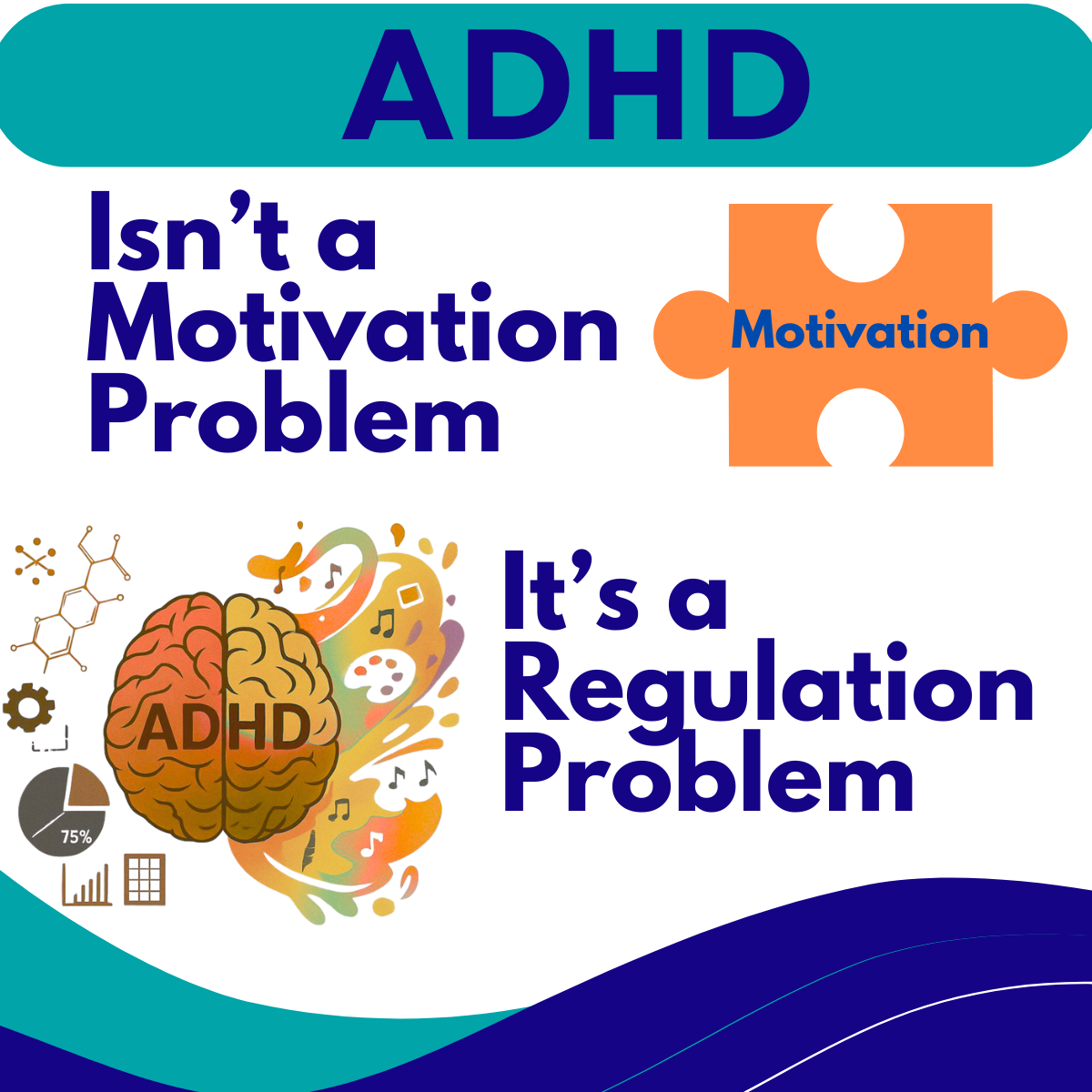
ADHD Isn’t a Motivation Problem — It’s a Regulation Problem
Many people with ADHD are told—directly or indirectly—that they just need to try harder.
Be more disciplined.
Be more consistent.
Be more motivated.
But ADHD isn’t a lack of motivation.
It’s a difficulty with regulation.
What “Regulation” Actually Means in ADHD
Regulation refers to how the brain manages things like:
starting tasks
sustaining attention
shifting between activities
tolerating frustration
managing emotional intensity
When regulation is disrupted, motivation looks inconsistent.
Not absent — just unreliable.
This is why someone with ADHD may:
spend hours fully absorbed in one task
feel physically stuck when trying to start another
know exactly what needs to be done, yet feel unable to do it
The issue isn’t desire, care, or effort.
It’s that the nervous system doesn’t mobilize on command.
Why Starting Tasks Can Feel So Hard
Task initiation is one of the most misunderstood parts of ADHD.
For many people with ADHD, starting a task requires:
emotional safety
a manageable level of demand
enough stimulation or interest
When a task feels overwhelming, boring, or emotionally loaded, the nervous system often resists — not out of defiance, but protection.
From the outside, this can look like procrastination.
On the inside, it often feels like being frozen, flooded, or shut down.
The Real Cost: Shame, Not ADHD
Over time, repeated struggles with regulation often lead to shame.
People begin to believe they are:
lazy
unreliable
incapable of change
That belief often causes more harm than ADHD itself.
Blaming yourself for a nervous system difference erodes confidence, increases anxiety, and makes regulation even harder — creating a cycle that’s difficult to break without support.
What Actually Helps (And What Usually Doesn’t)
Support for ADHD doesn’t work well when it focuses on forcing motivation.
It’s far more effective when it focuses on:
reducing emotional load
building external supports
learning regulation skills
creating systems that work with the brain, not against it
When regulation improves, motivation often follows naturally.
If This Resonates
You’re not broken.
You’re not failing.
You’re not “behind.”
Your brain just needs a different kind of support.
ADHD-informed therapy and coaching are designed to help you understand how your nervous system works, reduce shame, and build strategies that actually fit you — not who you’ve been told you should be.
