
ADHD Burnout Looks Like Depression — But Isn’t
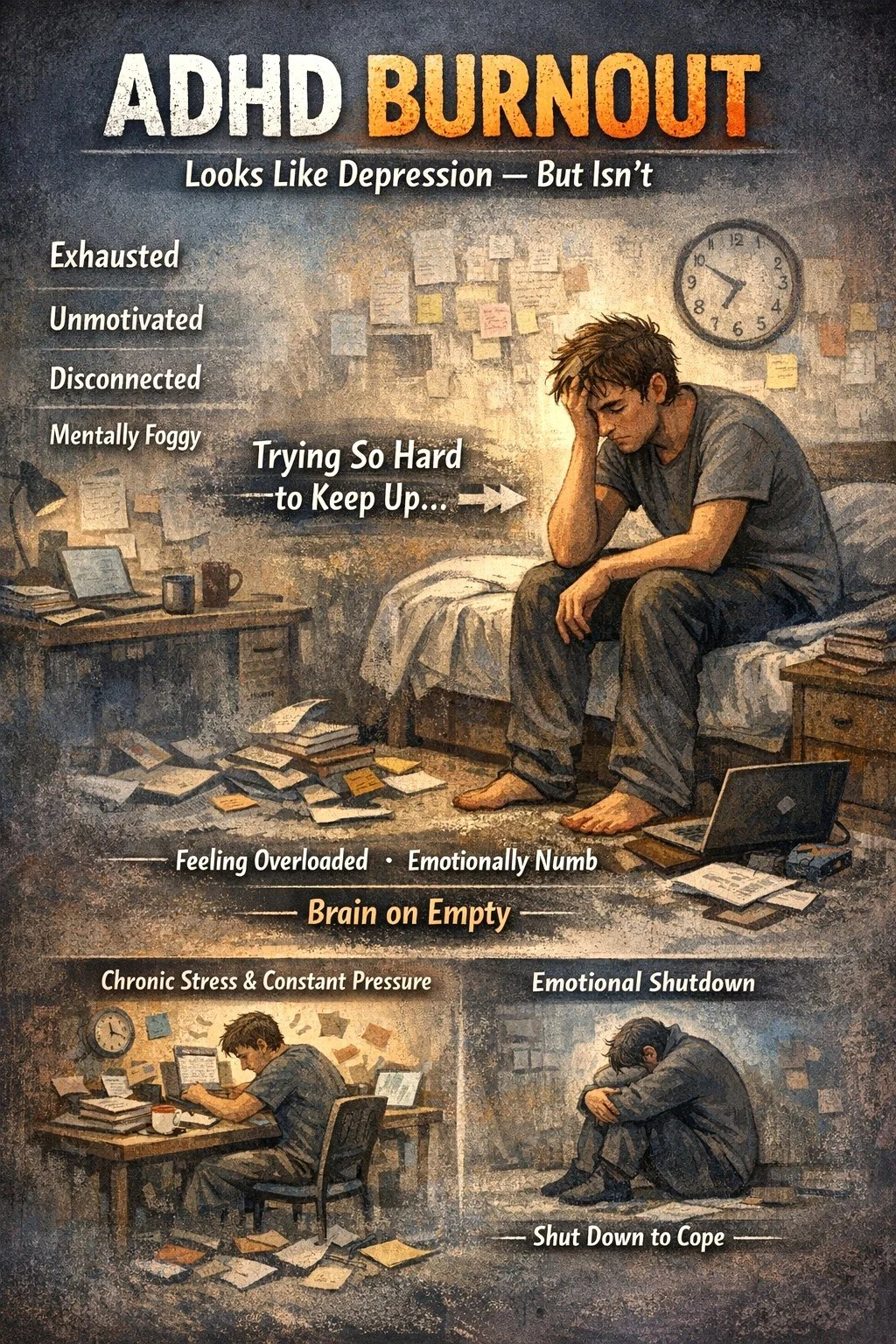
Why So Many People With ADHD Feel “Broken” When They’re Actually Overloaded
“ADHD burnout looks like depression — but isn’t.”
Many people with ADHD eventually reach a point where they stop recognizing themselves.
They feel flat.
Exhausted.
Disconnected.
Unmotivated.
From the outside — and sometimes even from the inside — it can look like depression.
But often, what’s happening is something different.
It’s ADHD burnout.
And misunderstanding it can lead people to blame themselves instead of addressing the real problem.
The Hidden Cost of Chronic Overcompensation
People with ADHD spend much of their lives overcompensating.
They work harder to:
Stay organized
Focus longer
Remember what others don’t have to think about
Keep up with expectations that weren’t built for their brains
This effort is often invisible — but constant.
Over time, the nervous system stays in a near-permanent state of effort and alertness.
There’s very little recovery.
ADHD burnout isn’t caused by laziness or lack of motivation.
It’s caused by too much sustained effort for too long.
Masking Is Exhausting — Even When You’re “High Functioning”
Many people with ADHD become very good at masking.
They appear:
Successful
Capable
Organized
“On top of things”
But masking requires continuous self-monitoring:
Don’t forget
Don’t interrupt
Don’t fall behind
Don’t mess up
This constant internal pressure drains emotional and cognitive resources.
Eventually, the system runs out of capacity.
What shows up then can look like:
Emotional numbness
Withdrawal
Irritability
Loss of interest
Mental fog
Not because the person doesn’t care —
but because they’re exhausted beyond capacity.
Emotional Shutdown Is a Protective Response
When effort no longer works, the nervous system shifts strategies.
Instead of pushing harder, it pulls back.
This is where ADHD burnout often gets confused with depression.
But emotional shutdown isn’t a lack of feeling —
it’s a protective response to overload.
The brain is saying:
“I can’t keep doing this at this pace.”
Without recognizing burnout for what it is, people often internalize the experience as:
“Something is wrong with me”
“I’m failing”
“I should be able to handle this”
This misunderstanding adds shame on top of exhaustion.
Why ADHD Burnout Is So Often Missed
ADHD burnout is frequently overlooked because:
The person has been “coping” for years
They’ve been high-achieving or high-functioning
The collapse doesn’t look dramatic — it looks quiet
Instead of falling apart, people often just… fade.
They stop trying.
They disengage.
They feel emotionally blank.
And because it doesn’t match stereotypes of ADHD, it’s easy for both individuals and professionals to miss.
What Actually Helps
Recovering from ADHD burnout isn’t about pushing harder or “getting motivated.”
It starts with:
Reducing chronic load
Increasing nervous system recovery
Addressing unrealistic expectations
Rebuilding support that fits how ADHD brains work
Most importantly, it involves changing the story from:
“I’m broken”
to:
“I’m overloaded.”
The Takeaway
If you or someone you support feels numb, exhausted, and disconnected — especially after years of effort — it may not be depression alone.
It may be ADHD burnout.
And burnout isn’t a personal failure.
👉 You’re not broken — you’re overloaded.
Support that understands ADHD, burnout, and nervous system regulation can make a meaningful difference — not by fixing you, but by helping your system recover.
